Friday, May 3, 2013

Cuba. Trinidad


Tuesday, April 9, 2013

The blue iguana or Grand Cayman iguana.

The blue iguana or Grand Cayman iguana (Cyclura lewisi) is an endangered species of lizard of the genus Cyclura endemic to the island of Grand Cayman. 


The blue iguana is one of the longest-living species of lizard (possibly up to 69 years). The record is 67 years.


The blue iguana prefers dwelling in rocky, sunlit, open areas in dry forests or near the shore, as the females must dig holes in the sand to lay eggs in June and July. A possible second clutch is laid in September. The blue iguana's vegetarian diet includes plants, fruits, and flowers. Its coloration is tan to gray with a bluish cast that is more pronounced during the breeding season and more so in males. It is large and heavy-bodied with a dorsal crest of short spines running from the base of the neck to the end of the tail.


Monday, September 3, 2012

Cuba.

Smoke cigars, music and sun encloud of peace and quiet, and the magic begins ...


You go back to the past. Vintage cars that glisten as if just left the assembly line, are scattered around guns left over from the Revolution.


Havana. If you were not in Havana, consider that you have not seen Cuba.
Bridge on the way from Varadero to Havana - the pride of the Cuban engineers.


Here it is, the Cuban heart:


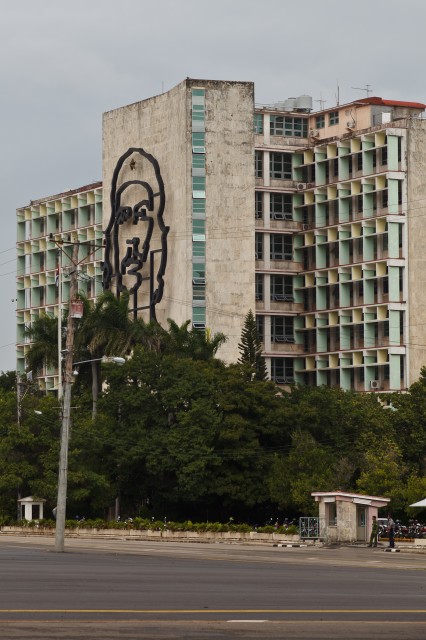
Interior Ministry building with Che

The famous Capitol


Local cinema


Amazing musicians in the Cuban cafe


Local taxi:


Get to Cuba. In a land where time stood still, where there is no rush, no experiences ... Hurry up, because the second hand is about to jump from one division to another, and the magic is over, - minute flight, counting the months and years, turning Cuba into one of the many paradise islands in the Caribbean Sea with modern machinery, roads and hotels.

Monday, June 11, 2012

Tulum

Tulum is the site of a Pre-Columbian Maya walled city serving as a major port for Coba.  The ruins are situated on 12-meter  tall cliffs, along the east coast of the Yucatan Peninsula on the Carribian Sea  in the state of Quintana Roo, Mexico. Tulum was one of the last cities inhabited and built by the Mayans, it was at its height between the 13th and 15th centuries and managed to survive about 70 years after the Spanish began occupying Mexico. Old World diseases brought by the Spanish settlers appear to have been the cause of its demise. One of the best-preserved coastal Maya sites, Tulum is today a popular site for tourists.


Monday, June 4, 2012

Pink Sand's beach...

In the Bahamas - is truly a magical place - the five-kilometer  cherry color beach. The unusual pink sand formed by the tiny creatures Foraminifera shell that covers the bottom of the ocean nearby. The waves carried him ashore did not, and this gives an interesting shade of sand.


Friday, June 1, 2012

Marigot Bay, St. Lucia


Marigot Bay is located on the western coast of the Carribian island of Saint Lucia, 3.75 miles southwest from Castries  and a short distance from the Saint Lucian National Marine Reserve. It is surrounded on three sides by steep, forested hills.


The bay on three sides is surrounded by forested hills. Bay is a historic landmark, being the site of many battles between the French and British fleets.

Friday, February 3, 2012

The Real Treasures Of The Caribbeans...


Can you imagine that recently to the shores of the Caribbean landed filibusters were hiding their treasures? Would be great to find the pirate treasure! But what island enwombs these treasures? Martinique, Guadeloupe, Trinidad and Tobago, Dominica, and still very attractive for many, many names, disturbing the mind and do not give to sleep at night. And we know little about them. With the exception of Cuba, Jamaica, Dominican Republic, Antigua, Barbados, all the other Caribbean islands remain unexplored, and for several reasons:

The islands are expensive and not specifically unwind, as interested in preserving its beauty and virginity, focusing primarily on the quality of tourists, rather than their quantity.

Those who manage to solve this issue, discover the real treasures of the Caribbean: an exotic vacation on the beautiful fairy-tale island.

A few facts about the Caribbean islands:

1. Caribbean Islands are located between the North and South America, where lies a blue Caribbean Sea or as it used to be called Filibusterian.

2. The Caribbean island got their name owing to big and combative Carib Indian tribe that once lived on their picturesque shores, and later was almost completely destroyed by the colonialists. To date, only about three thousand of the remaining Caribbean Indians live in the north of the island of Dominica.

3. Caribbean Indians were given the names of the islands by their distinctive features: "The Land of Flowers" for Martinique, the "Island of beautiful waters" for Guadeloupe, "fertile ground" for Saint Kitts, "High her body" for Dominica, etc.

The Spanish, British, French and other travelers, invaders, mainly used the names of the saints: St. Vincent, St. Kitts, St. Martin, etc.

All of the Caribbean is actually very different: from the landscape, nature, and ending with people inhabiting them. On each island under the influence of cultures of the colonizers (English, French, Spanish etc), imported slaves from Africa and local residents - created its own indescribable explosive mixture.